An inguinal hernia is the most common hernia there is, here is what a groin bulge means.
An inguinal hernia is a bulge in the groin where tissue pushes through a natural weak point in the abdominal wall. It is far more common than most people realise, especially in men, and there is nothing to be embarrassed about. Dr Daniel Lee assesses it properly and gives you a clear answer: watch it, or repair it, and why.

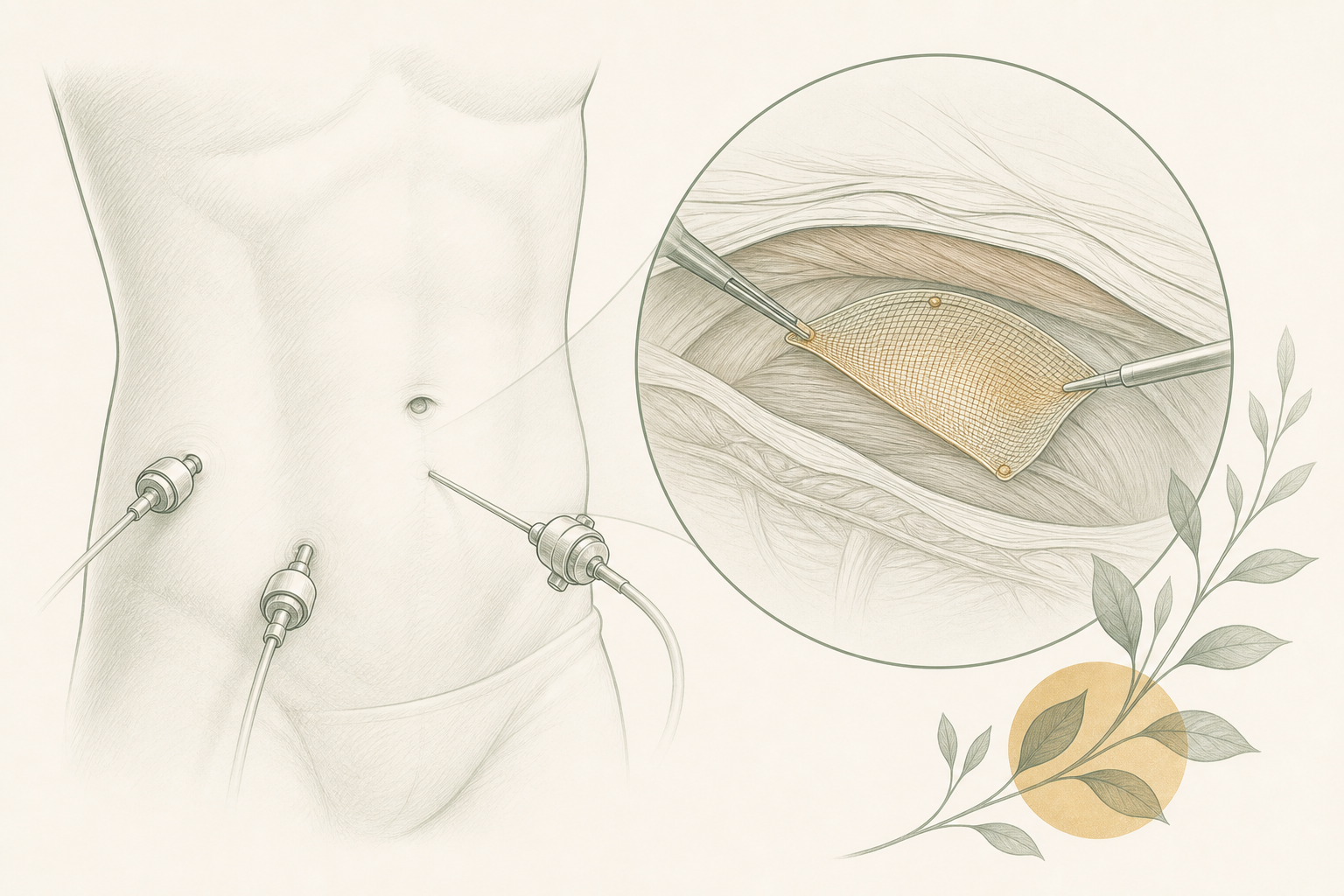
Tissue pushing through the inguinal canal, the natural passage in the groin.
The inguinal canal is a passage through the lower abdominal wall, just above the groin crease. In men it carries the cord to the testicle, which makes the canal a built-in weak point and is why inguinal hernias are much more common in men. When abdominal tissue or bowel pushes into the canal, you notice a bulge in the groin that tends to appear with standing, coughing, or lifting, and often eases when you lie down.
An inguinal hernia does not repair itself, and most enlarge gradually. In some men a bulge extends down towards the scrotum over time. None of this means panic; it means the hernia should be examined, understood, and given an honest plan. Dr Lee has repaired hernias across more than 20 years in general and colorectal surgery, in both open and keyhole approaches.
The groin bulge
A swelling in the groin crease that comes up with activity and settles with rest or lying down. Many people first notice it in the shower or after a long day on their feet.
The dragging ache
Some hernias hurt less than they drag. A heaviness or pulling in the groin after standing, sport, or lifting is a common first sign, sometimes before any bulge is obvious.
Who tends to develop one
Men more often than women, because of the canal's anatomy. Heavy lifting, a chronic cough, straining with constipation, and age-related weakening of the wall all contribute.
One side or both
Inguinal hernias can occur on one side or both. When both sides need repair, a keyhole approach can often deal with the two in the same operation.
When an inguinal hernia should see a surgeon, and when it should not wait.
A groin bulge deserves a proper examination even when it is painless, because the plan depends on what the hernia is doing. A few signs mean it should not wait.
- A visible or palpable bulge in the groin, with or without discomfort
- Groin ache, heaviness, or dragging that builds through the day or after lifting
- A bulge extending towards the scrotum
- A hernia that is interfering with work, sport, or daily activity
- A bulge you used to be able to push back that no longer goes in
A hard, painful groin bulge that will not go back is an emergency.
If the bulge becomes firm, severely painful, or discoloured, cannot be pushed back in, or is accompanied by vomiting or a swollen abdomen, the hernia may be strangulating and the trapped tissue can lose its blood supply within hours. Go to a hospital emergency department immediately rather than waiting for a clinic appointment.
Mesh repair, open or keyhole, matched to you rather than by default.
The lasting treatment for an inguinal hernia is surgical repair, in which the tissue is returned to where it belongs and the weak point is reinforced, usually with a mesh so the repair is not under tension. For a small, painless hernia in someone well, a period of watchful waiting can be reasonable, and Dr Lee will say so honestly when it is; many of those hernias do eventually come to repair as symptoms build.
Repair is done either through a small open incision in the groin or by keyhole surgery, which is often favoured for hernias on both sides or for a hernia that has come back after previous open repair. Most repairs are day procedures. Dr Lee walks you through the choice, the anaesthesia, and what your specific hernia makes sensible before anything is booked.
- Examination standing and lying down, to confirm the hernia and how readily it reduces
- An honest discussion of watchful waiting versus repair for your situation
- Mesh repair, open or keyhole, including both sides in one operation where appropriate
- A clear plan for the day of surgery, usually as a day procedure
Read more about the operation itself, including open versus keyhole mesh repair, on the hernia surgery in Singapore page.
A surgeon who built care around older patients.
Groin hernias become more common with age, exactly when families start asking whether an operation is safe at all. As the former Surgical Lead for Geriatric Surgery at Khoo Teck Puat Hospital, Dr Lee developed assessment and recovery pathways designed around older patients, and co-authored a 2024 review in the Journal of Gastrointestinal Surgery on how surgeon-led geriatric care drives good outcomes in older patients undergoing abdominal surgery.
For an older patient, the decision weighs the hernia's risk against the operation's, and that judgment benefits from a surgeon who has led exactly this kind of care. More about Dr Lee's background and approach.

Most people are home the same day and walking that evening.
Day surgery for most
The majority of inguinal hernia repairs are day procedures. Groin discomfort is expected in the first days and is managed with simple pain relief; walking early is encouraged.
A staged return to activity
Desk work is usually possible within days, driving once you can brake comfortably, and heavy lifting after several weeks so the repair matures under no strain. Dr Lee gives timelines for your actual job and sport.
Looking after the repair
Treating a chronic cough, easing constipation, and building lifting back up gradually all protect the repair. These practical points are covered before you go home.
Clear fees for inguinal hernia repair, with MediSave and insurance guidance.
Your exact fee is explained clearly at consultation, before anything is scheduled. As a public reference point, the Ministry of Health publishes fee benchmarks for the doctors involved in groin hernia repair, on one side (procedure code SF819A) or on both sides in the same operation (SF820A). The figures below are those benchmarks, with GST. They are a guide, not a quotation.
| What makes up your bill | MOH fee benchmark (with GST) |
|---|---|
| Surgeon fee, repair on one sidegroin hernia, inguinal or femoral, SF819A | SGD 3,924 to 6,540 |
| Surgeon fee, repair on both sidesgroin hernia, inguinal or femoral, SF820A | SGD 6,104 to 9,810 |
| Anaesthetist fee, one sidesame procedure, SF819A | SGD 1,199 to 1,744 |
| Anaesthetist fee, both sidessame procedure, SF820A | SGD 1,526 to 2,289 |
| Hospital or day-surgery facility feeno MOH doctor-fee benchmark applies | Varies by hospital, quoted before scheduling |
These are published fee benchmarks, before MediSave and insurance. Inguinal hernia repair is typically MediSave claimable and is usually covered by Integrated Shield Plans, so most insured patients pay much less out of pocket. The team works out your likely cost with you before anything is scheduled.
You can check these figures against the published MOH fee benchmark page.
Inguinal hernia repair is typically a day procedure. If a hernia is found on both sides, repairing them in one operation is billed under the both-sides code rather than twice. The facility fee depends on the hospital and on your ward or day-surgery choice, so it is quoted to you directly rather than benchmarked.
Use what you are entitled to
Hernia repair is a MediSave-claimable surgical procedure, subject to the applicable withdrawal limits. The team helps you apply it correctly.
Often covered by your plan
Day-surgery hernia repair is usually covered under Integrated Shield Plans. The team helps you understand what your plan covers before anything is scheduled.
We handle the claim
The team assists with the forms and liaises with your insurer where possible, so the administrative side is as straightforward as the consultation.
Fee benchmark figures are the Ministry of Health (Singapore) surgeon and anaesthetist fee benchmarks for procedures SF819A and SF820A, with GST, and are a public guide, not a quotation.
The plans we work with.
Dr Daniel Lee practises with Colorectal Clinic Associates (CCA). The clinic works with the insurers below, and the team assists with claims and eligibility checks.






















Inguinal hernia in Singapore, answered plainly.
Can an inguinal hernia heal on its own?
Do I need surgery if my hernia does not hurt?
Open or keyhole repair, which is better?
What happens if I ignore it?
How soon can I go back to work and exercise?
Will MediSave or my insurance cover the repair?
Groin hernia assessments across five private hospitals.
Related conditions and treatments.
A short message is enough to begin.
Whether the bulge appeared last week or you have been living with it for years, send a note with your name, number and what you are noticing. Dr Lee's team will reply on WhatsApp and arrange a time and location that suits you.