A femoral hernia is a small groin lump with more risk than its size suggests.
A femoral hernia is a small bulge at the top of the thigh, just below the groin crease. It is less common than other hernias and is seen more often in women. Because the gap it pushes through is narrow, it carries a higher risk of trapping tissue, which is why the honest advice is usually to repair it rather than watch it. Dr Daniel Lee assesses it properly and explains exactly why.

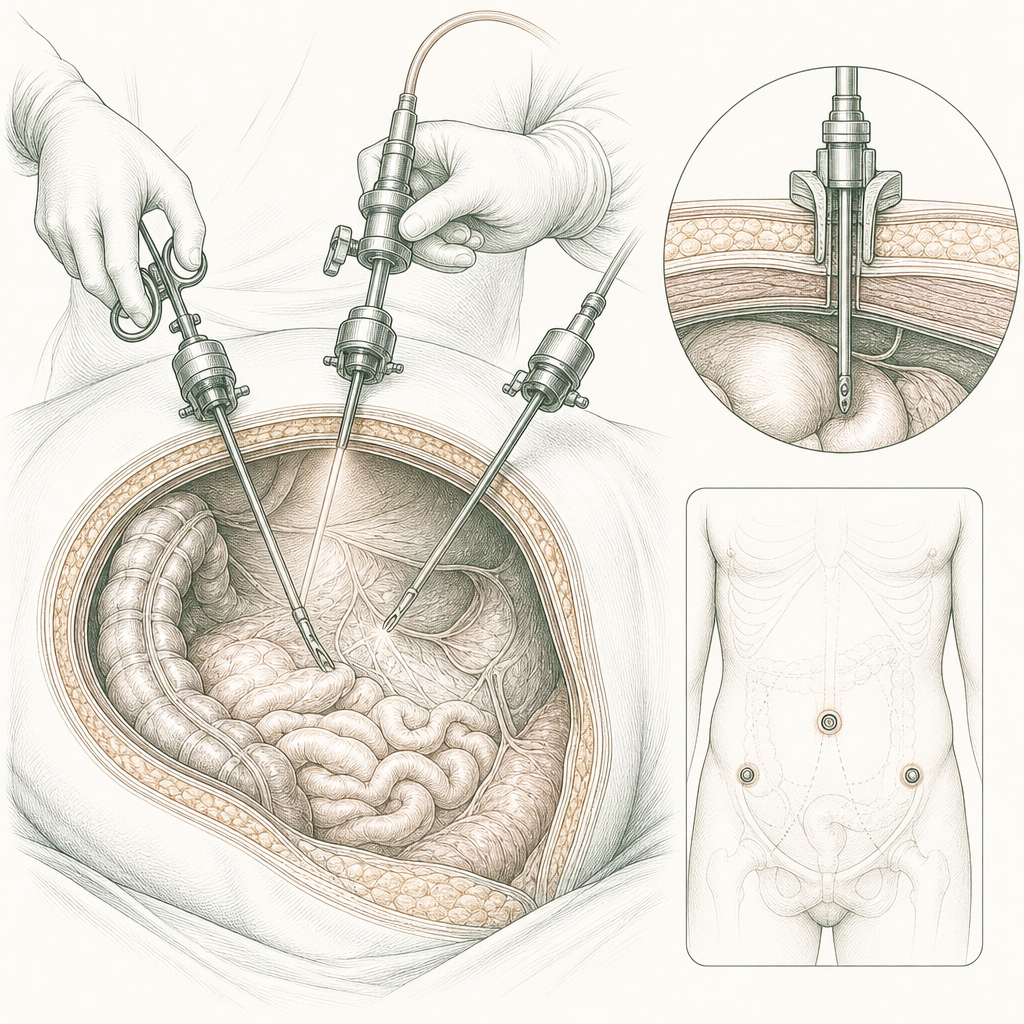
Tissue pushing through the femoral canal, a narrow passage below the groin crease.
Just below the crease of the groin, alongside the large blood vessels that run to the leg, sits a narrow passage called the femoral canal. When abdominal tissue or bowel pushes into it, a small, often subtle bulge appears at the very top of the thigh. Because the canal is naturally wider in women, femoral hernias are seen more often in women, particularly later in life.
The size is deceptive. A femoral hernia is often smaller and less obvious than an inguinal hernia, and it is regularly mistaken for one, or for an enlarged lymph node or a fatty lump. But the narrow, rigid opening it pushes through means trapped tissue cannot easily slip back, so femoral hernias strangulate more readily than other groin hernias. Getting the diagnosis right, and acting on it, matters more here than with any other hernia type.
A small lump at the top of the thigh
Typically below the groin crease, where inguinal hernias sit above it. It may only show when standing and can be easy to miss, especially in a fuller groin.
More common in women
The female pelvis makes the femoral canal wider, so this hernia is seen more often in women, particularly older women and those who have lost weight or had several pregnancies.
Often mistaken for something else
Femoral hernias are commonly confused with inguinal hernias, lymph nodes, or benign lumps. The distinction changes the advice, which is why an examination by a surgeon who repairs both is worthwhile.
Why it is treated with urgency
The femoral canal is narrow and unyielding. Tissue that enters it can become trapped, and trapped tissue can lose its blood supply. That is why repair, rather than observation, is the usual recommendation.
When to see a surgeon, and when it should not wait.
Any new groin or upper-thigh lump deserves a proper diagnosis, and a suspected femoral hernia deserves a prompt one. These are the signs to act on.
- A new lump at the top of the thigh or below the groin crease
- Groin discomfort on standing, lifting, or by the end of the day
- A lump that has been dismissed before but is changing or growing
- Intermittent groin pain with no obvious lump, especially in women
- A lump that does not go away when you lie down
A hard, painful groin lump with vomiting is an emergency.
If the lump becomes firm, very tender, or discoloured, or you develop abdominal pain, bloating, or vomiting, the hernia may be strangulating, and with a femoral hernia that risk is real and moves quickly. Go to a hospital emergency department immediately. Do not wait to see whether it settles overnight.

Repair is usually recommended, not watchful waiting.
For many hernias there is an honest conversation about observation. A femoral hernia is the exception: because the risk of strangulation is higher, the accepted surgical advice is to repair it once it is diagnosed, rather than wait for trouble. Dr Lee explains this reasoning openly, so the recommendation is never a push, just the logic behind it.
The repair closes the femoral canal defect and reinforces it, through a small open incision or by keyhole surgery. A keyhole approach can also confirm the diagnosis when the picture is unclear, and deal with an inguinal hernia on the same side if one is found. Planned repairs are usually day procedures.
- Careful examination to distinguish a femoral from an inguinal hernia or other groin lumps
- A frank explanation of why repair is advised for this hernia type
- Repair through a small open incision or by keyhole surgery, matched to your anatomy
- A clear plan for the day of surgery, usually as a day procedure
Read more about the operation itself, including open versus keyhole repair, on the hernia surgery in Singapore page.
A surgeon who built care around older patients.
Femoral hernias are most often repaired in older women, exactly the patients whose families ask whether surgery is safe at all. As the former Surgical Lead for Geriatric Surgery at Khoo Teck Puat Hospital, Dr Lee developed assessment and recovery pathways designed around older patients, and co-authored a 2024 review in the Journal of Gastrointestinal Surgery on how surgeon-led geriatric care drives good outcomes in older patients undergoing abdominal surgery.
For this particular hernia, that experience matters in two ways: knowing when to operate promptly, and how to do it gently in an older patient. More about Dr Lee's background and approach.

A planned repair is a far easier road than an emergency one.
Day surgery for planned repairs
A planned femoral hernia repair is usually a day procedure, with groin discomfort managed by simple pain relief and early walking encouraged. This is one more reason not to wait for the hernia to declare itself as an emergency.
A staged return to activity
Light activity resumes quickly; heavier lifting waits several weeks while the repair heals. Dr Lee gives timelines for your actual routine rather than a generic list.
Follow-up that closes the loop
The wound and the repair are reviewed, questions are answered, and you leave knowing what is normal, what is not, and when to call the team.
Clear fees for femoral hernia repair, with MediSave and insurance guidance.
Your exact fee is explained clearly at consultation, before anything is scheduled. A femoral hernia is coded with inguinal hernia as a groin hernia repair, so the same Ministry of Health fee benchmarks apply, procedure code SF819A for one side. The figures below are those benchmarks, with GST. They are a guide, not a quotation.
| What makes up your bill | MOH fee benchmark (with GST) |
|---|---|
| Surgeon fee, repair on one sidegroin hernia, inguinal or femoral, SF819A | SGD 3,924 to 6,540 |
| Anaesthetist feesame procedure, SF819A | SGD 1,199 to 1,744 |
| Hospital or day-surgery facility feeno MOH doctor-fee benchmark applies | Varies by hospital, quoted before scheduling |
These are published fee benchmarks, before MediSave and insurance. Femoral hernia repair is typically MediSave claimable and is usually covered by Integrated Shield Plans, so most insured patients pay much less out of pocket. The team works out your likely cost with you before anything is scheduled.
You can check these figures against the published MOH fee benchmark page.
A planned femoral hernia repair is typically a day procedure. An emergency repair, where tissue has already become trapped, is a larger operation with an inpatient stay and costs more, which is one of the practical reasons not to leave it. The facility fee depends on the hospital and on your ward or day-surgery choice, so it is quoted to you directly rather than benchmarked.
Use what you are entitled to
Hernia repair is a MediSave-claimable surgical procedure, subject to the applicable withdrawal limits. The team helps you apply it correctly.
Often covered by your plan
Day-surgery hernia repair is usually covered under Integrated Shield Plans. The team helps you understand what your plan covers before anything is scheduled.
We handle the claim
The team assists with the forms and liaises with your insurer where possible, so the administrative side is as straightforward as the consultation.
Fee benchmark figures are the Ministry of Health (Singapore) surgeon and anaesthetist fee benchmarks for procedure SF819A, with GST, and are a public guide, not a quotation.
The plans we work with.
Dr Daniel Lee practises with Colorectal Clinic Associates (CCA). The clinic works with the insurers below, and the team assists with claims and eligibility checks.






















Femoral hernia in Singapore, answered plainly.
How is a femoral hernia different from an inguinal hernia?
Can a femoral hernia be watched instead of repaired?
Why do femoral hernias happen more in women?
I was told my groin lump is a lymph node. Could it be a hernia?
What does the repair involve?
Will MediSave or my insurance cover the repair?
Femoral hernia assessments across five private hospitals.
Related conditions and treatments.
A short message is enough to begin.
If you have noticed a lump at the top of the thigh, or a groin lump that has never been properly explained, send a note with your name, number and what you are noticing. Dr Lee's team will reply on WhatsApp and arrange a time and location that suits you.